

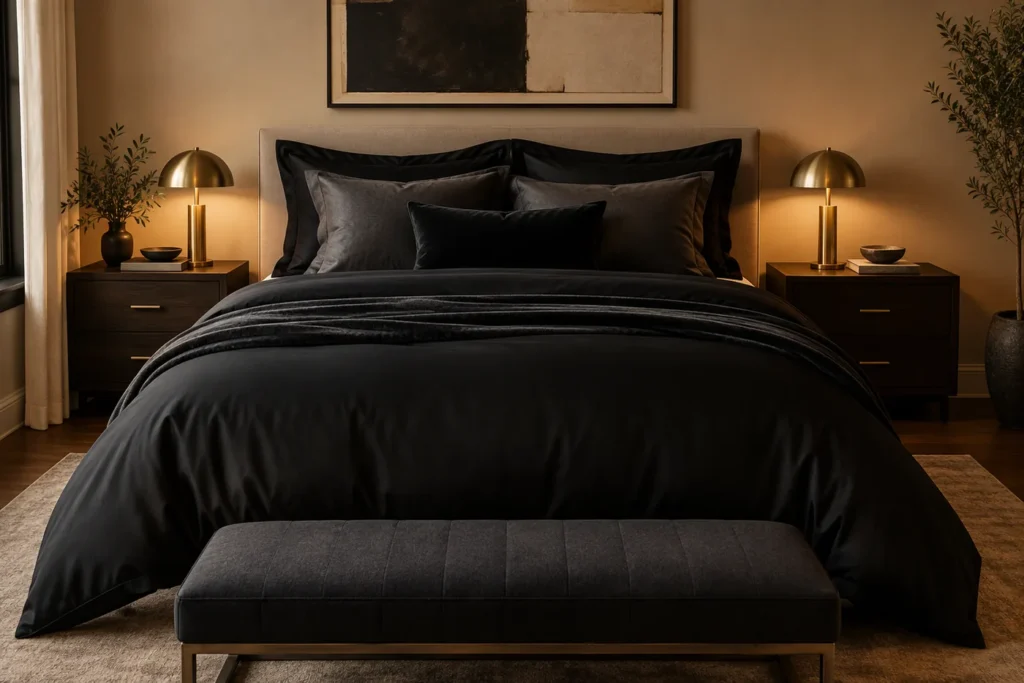
A black duvet cover can give your bedroom the crisp look of a boutique hotel, the warmth of a cozy retreat, or the depth of a moody space. The difference comes down to what you pair it with. White sheets sharpen the look, warm wood softens it, and a textured throw can make dark bedding feel more inviting. These 10 black duvet cover bedroom ideas show how to style the same bedding in different ways, whether you’re refreshing a small room or working with furniture and accessories you already own.
1. Black Duvet Cover With Crisp White Sheets
A black duvet cover and white sheets create a clean, hotel-inspired bed that works with almost any headboard. The detail that makes the pairing feel deliberate is a wide band of white at the top of the bed. It breaks up the dark bedding and draws your eye toward the pillows. If your room has cream walls or warm carpet, ivory sheets give you a softer version of the same look.
How to Style It
- Create a visible sheet fold. Pull the white top sheet up over the duvet and fold it down about six to eight inches. Smooth the corners so the white band runs evenly across the bed.
- Repeat the white at the headboard. Stand white sleeping pillows behind a pair of black shams. The white pillow edges help define the shams against a dark headboard.
- Choose one detail to soften the contrast. Try a pale wood bench, a woven basket, or a light gray throw folded across the foot of the bed.
Finishing Touches
Keep the bedside surfaces simple so the bedding has room to stand out. Matching lamps suit the hotel look, especially if you have space for two nightstands. In a smaller room, one lamp with a white fabric shade can echo the sheet fold and cast a softer light across the black duvet.
2. Black Duvet Cover With Warm Beige Layers

Beige softens black bedding without making the room feel busy. Oatmeal linen, cream upholstery, and a chunky knit throw each reflect light a little differently, giving this neutral palette more depth. This combination is especially easy to build around a room that already has beige carpet, warm white walls, or a light upholstered headboard.
How to Style It
Start with cream or oatmeal pillowcases, then set a smaller beige lumbar cushion in front. Choose a cushion with a woven finish so it stands out against smoother pillowcases even when the colors are close. Drape a beige knit throw over one lower corner of the bed and leave the other corner black. The slightly uneven arrangement suits a relaxed bedroom and lets both fabrics show.
Use your existing upholstery as a color reference. A warm cream headboard pairs well with oat and sand tones, while a gray-beige headboard works with mushroom or light taupe. Comparing the fabrics in daylight helps you see whether their undertones fit together.
Finishing Touches
A ceramic lamp with a linen shade brings the same soft texture to the bedside. If you want one more warm detail, hang oak-framed artwork over the headboard or place a small woven tray on the nightstand. Either is enough to connect the bed to the rest of the room.
3. Black Duvet Cover With Walnut Furniture

Walnut gives a black duvet cover a warm backdrop. Its reddish-brown grain is especially noticeable beside matte bedding, which makes this pairing a natural fit for a mid-century bedroom. Low furniture and simple silhouettes keep the composition open. If you already have walnut nightstands, those alone can carry the look, even with a fabric headboard.
How to Style It
Choose washed cotton or linen for the duvet cover so the fabric has a soft finish. Add ivory sheets or a pair of ecru pillows to lighten the top of the bed. A low walnut headboard with a plain horizontal profile works well here because you can see the wood grain above the pillows. If the headboard has slats or a distinctive pattern, keep the bedding largely solid.
For a room with a dark walnut dresser as well as nightstands, leave some pale wall space around the furniture. An ivory rug can also brighten the area below the bed, especially on dark wood floors.
Finishing Touches
Try an opal glass lamp, a small brass reading light, or a cream ceramic lamp with a rounded base. Pick one accent finish and repeat it in a picture frame or drawer pull. Artwork with a warm white background and a few black lines can connect the darker bed to the lighter wall.
4. Black Duvet Cover With Sage Green Accents
Sage green brings a soft wash of color to a black duvet cover. The combination feels airy with warm white walls and light wood, while gray-green accents can blend into a room with cooler finishes. A sage cushion and a lightweight quilt are enough to try the palette with your current bedding.
How to Style It
- Use sage at two heights. Place a sage lumbar pillow near the headboard and fold a sage quilt across the lower third of the mattress. This carries the color from the top of the bed to the foot.
- Let a light neutral sit between the colors. A cream pillowcase or ivory sheet fold gives the eye a break between the muted green and black.
- Repeat the green once off the bed. A small glazed vase or botanical print is enough. Pick up a hint of the bedding color rather than trying to match the exact shade.
Finishing Touches
A light oak nightstand or cane-front cabinet gives the room an easy, natural finish. In a room with limited daylight, hold the sage fabric against the black duvet before you commit. Muted greens can look grayer in shadow, and a slightly warmer sage may stay more visible.
5. Black Duvet Cover With Rust and Terracotta Layers
A rust quilt makes a black duvet cover feel warmer, while terracotta brings a softer, clay-colored accent. Either works with woven rugs, unglazed pottery, and warm-toned wood. This is a good direction for a bedroom with creamy walls or natural textures that already lend themselves to an earthy palette.
How to Style It
Choose one warm shade for the largest layer. Fold a deep rust quilt across the foot of the bed if you want a strong band of color. For a gentler effect, lay a dusty terracotta throw diagonally over one corner. Keep the black duvet visible across the center of the mattress so both colors have a clear place in the arrangement.
Use cream, flax, or sand pillowcases to keep the top of the bed light. If you want a patterned cushion, look for a small stripe or block print that includes a little of the warm accent. A cream background helps the pattern show clearly against the dark bedding.
Finishing Touches
Bring the accent off the bed with a terracotta pot or a clay-colored lamp base on the nightstand. A jute rug adds texture and frames the dark duvet, especially if it extends far enough past the bed to show on both sides. Beside the bed, a warm lamp makes the rust or terracotta look richer after dark.
6. All-Black Bedding With Subtle Charcoal Layers
An all-black bed has more depth when you mix fabrics and shades. A washed black duvet can look almost smoky beside jet-black sheets, while charcoal woven pillows add a lighter layer near the headboard. The variations are subtle, so pay attention to how the bedding looks in the morning and under your bedside lamps.
How to Style It
- Start with a matte duvet cover. Washed cotton and linen have visible folds that catch side light and give the surface some definition.
- Build up from black sheets. Choose a fitted sheet and pillowcases in the same deep black, then add charcoal shams or a dark gray lumbar cushion.
- Use a throw with a distinct weave. A charcoal waffle-knit throw or ribbed blanket adds a visible texture across the foot of the bed.
- Give the bed a source of side light. A nearby window or a lamp with a fabric shade can reveal folds and bring out the differences between the layers.
Finishing Touches
Let the wall or headboard provide an outline for the bedding. A gray upholstered headboard, a warm plaster wall, or a wood bed frame can define the shape of the bed. Even a single lighter detail, such as a stone lamp base on a dark nightstand, gives the room a visible point of contrast.
7. Black Duvet Cover With Striped Sheets
Striped sheets offer an easy way to bring pattern to a solid black duvet. A fine black-and-white stripe reads as crisp and understated, while a wider stripe feels more graphic. Because you only see the top sheet and pillowcases once the bed is made, you can enjoy the pattern in a small dose.
How to Style It
Let a few inches of the striped top sheet show above the duvet. A narrow fold works well when the stripes are bold. A deeper fold gives a fine ticking stripe enough room to be seen across the room. Add matching pillowcases in front of solid shams so the pattern appears in two places.
Consider the stripe direction when you make the bed. Stripes running across the fold draw attention to the width of the mattress, while stripes running from head to foot create a different rhythm. Try both arrangements with the bedding you have and see which looks more balanced beside the headboard.
Finishing Touches
Keep the nearby accents quiet so the stripes read clearly. A plain globe lamp, solid curtains, or a simple timber nightstand will work. For a softer version of the black-and-white bedding aesthetic, choose charcoal stripes on an ivory background and add a flax-colored throw at the foot of the bed.
8. Black Duvet Cover in a Moody Olive Bedroom
Deep olive walls and a black duvet create a bedroom that feels intimate, especially in the evening. The green softens the transition between the wall and the bedding, while a small caramel or brass accent adds warmth. This palette works well in a room where you enjoy low evening light and want the bed to feel like part of the darker setting.
How to Style It
Use a matte black duvet cover and add a caramel velvet cushion where it can catch the light. Put a muted olive pillow behind it, ideally in a slightly lighter shade than the wall. These layers make the head of the bed easier to distinguish if you have a dark frame or headboard.
If you’re planning to paint, hold a large olive sample behind the bed and check it in daylight and at night. A green that looks mossy by the window may read almost brown under a warm bedside lamp. Look at it next to your duvet cover, since the bedding will influence how you see the wall color.
Finishing Touches
An aged brass sconce adds a warm detail at reading height. If you already have table lamps, a cream shade can provide a soft glow with a similar effect. Put pale paper artwork or an ivory mat above the bed if the headboard and bedding need a little more definition against the wall.
9. Black Duvet Cover in a Small, Bright Bedroom
In a small bedroom, a black duvet can turn the bed into a clear focal point. Keep the surrounding surfaces light and choose bedding that follows the shape of the mattress. If the bed sits close to a window, sheer curtains let light travel across the duvet during the day and make its texture easier to see.
How to Style It
- Keep the bed profile simple. Use your sleeping pillows and one small lumbar cushion. Smooth the duvet so the sides hang evenly and stay clear of the floor.
- Choose a light color near the head of the bed. Pale walls, a cream headboard, or a broad white sheet fold make the transition from wall to bedding feel less abrupt.
- Open up the bedside area. Try a slim open-frame nightstand or a wall-mounted shelf if you need to keep the floor clear.
- Use window light to show the fabric. Pull the sheers aside during the day when privacy allows. If you prefer blackout curtains at night, hang them so they can stack clear of the window.
Finishing Touches
A compact wall sconce can free up the nightstand and keep a narrow walkway easier to use. If the room needs one more decorative element, choose a single piece of artwork with a light background. A piece hung above the bed draws the eye upward without taking up floor space.
10. Black Duvet Cover With a Patterned Vintage Rug
A solid black duvet gives a patterned vintage rug room to stand out. A faded Persian-style rug, floral design, or geometric kilim can introduce several colors at once. The easiest way to make the bed feel connected to the rug is to borrow a single color from it and repeat that shade somewhere in the bedding.
How to Style It
Pick a color you can see clearly in the exposed part of the rug. If a rug has patches of faded brick red, use one brick-toned lumbar cushion. If dusty blue shows around the foot of the bed, try a folded blue throw. Keep the sheets simple so the patterned floor and the accent on the bed are easy to pick out.
Position the rug so enough of the pattern shows beside the mattress and at the foot. In a narrow room, a runner along the most-used side gives you a place to step onto in the morning and keeps the design visible. A patterned runner can also work if most of your larger rug would be hidden under the bed.
Finishing Touches
Let the rug guide smaller details such as a ceramic lamp, a wood picture frame, or a neutral curtain. A faded rug with cream motifs pairs well with ivory pillowcases, while a rug with deeper jewel tones can handle darker cushions. Look at the room from the doorway before adding another pattern. That view makes it easier to see how the rug and duvet work together.
FAQs
What color sheets go with a black duvet cover?
White sheets give a black duvet cover a crisp, hotel-inspired finish. Ivory, oatmeal, and beige create a warmer look, especially with wood furniture or cream walls. Charcoal sheets suit a dark bedding palette, while striped sheets add a little pattern that shows when you fold the top sheet back.
How do you make black bedding look cozy?
Layer black bedding with fabrics that have visible texture, such as washed linen, waffle-knit cotton, or a chunky throw. A warm beige blanket and a linen-shaded bedside lamp can soften the room in the evening. If the bed still looks flat, try adding a lighter pillow with a clearly defined weave.
Can you use a black duvet cover in a small bedroom?
Yes. A black duvet cover can give a small bedroom a clear focal point. Pair it with light walls or a pale headboard, keep the pillow arrangement simple, and choose a duvet that hangs clear of the floor. Sheer curtains and a slim nightstand can help the room feel more open.
What wall colors look good with black bedding?
Warm white, ivory, and soft greige give black bedding a lighter backdrop. Sage, olive, and muted taupe create a more layered look, especially with wood or brass nearby. Test wall samples next to your duvet